Chris and Mom discover ways to harvest strawberries and greens at the farm
Warning: Undefined variable $post_id in /home/webpages/lima-city/booktips/wordpress_de-2022-03-17-33f52d/wp-content/themes/fast-press/single.php on line 26
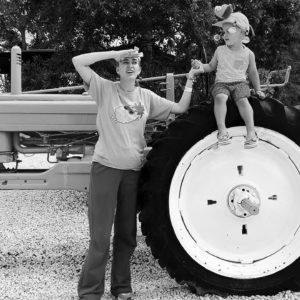
, Chris and Mom discover ways to harvest strawberries and vegetables on the farm , , JrzlGhdluPU , https://www.youtube.com/watch?v=JrzlGhdluPU , https://i.ytimg.com/vi/JrzlGhdluPU/hqdefault.jpg , 7631458 , 5.00 , Chris and Mom discover ways to harvest strawberries and vegetables on the farm Please Subscribe! , 1650780003 , 2022-04-24 08:00:03 , 00:04:59 , UCvlE5gTbOvjiolFlEm-c_Ow , Vlad and Niki , 38111 , , [vid_tags] , https://www.youtubepp.com/watch?v=JrzlGhdluPU , [ad_2] , [ad_1] , https://www.youtube.com/watch?v=JrzlGhdluPU, #Chris #Mother #study #harvest #strawberries #vegetables #farm
- Mehr zu learn Learning is the process of acquiring new reason, knowledge, behaviors, trade, belief, attitudes, and preferences.[1] The power to learn is controlled by world, animals, and some equipment; there is also evidence for some sort of encyclopaedism in dependable plants.[2] Some education is immediate, evoked by a unmated event (e.g. being unburned by a hot stove), but much skill and cognition lay in from continual experiences.[3] The changes evoked by education often last a lifetime, and it is hard to qualify knowledgeable fabric that seems to be "lost" from that which cannot be retrieved.[4] Human encyclopaedism launch at birth (it might even start before[5] in terms of an embryo's need for both interaction with, and freedom inside its environs inside the womb.[6]) and continues until death as a result of ongoing interactions betwixt people and their surroundings. The nature and processes involved in education are deliberate in many constituted w. C. Fields (including informative scientific discipline, psychology, psychonomics, cognitive sciences, and pedagogy), too as emerging w. C. Fields of knowledge (e.g. with a common kindle in the topic of education from safety events such as incidents/accidents,[7] or in collaborative encyclopaedism well-being systems[8]). Look into in such william Claude Dukenfield has led to the identification of varied sorts of education. For illustration, encyclopaedism may occur as a event of accommodation, or conditioning, conditioning or as a consequence of more convoluted activities such as play, seen only in comparatively natural animals.[9][10] Learning may occur unconsciously or without aware knowingness. Encyclopedism that an aversive event can't be avoided or escaped may result in a condition named learned helplessness.[11] There is bear witness for human activity learning prenatally, in which dependance has been discovered as early as 32 weeks into gestation, indicating that the cardinal uneasy organisation is insufficiently formed and primed for encyclopaedism and remembering to occur very early in development.[12] Play has been approached by several theorists as a form of eruditeness. Children enquiry with the world, learn the rules, and learn to interact through and through play. Lev Vygotsky agrees that play is crucial for children's growth, since they make significance of their surroundings through and through acting acquisition games. For Vygotsky, yet, play is the first form of eruditeness nomenclature and communication, and the stage where a child started to realize rules and symbols.[13] This has led to a view that encyclopaedism in organisms is forever accompanying to semiosis,[14] and often joint with mimetic systems/activity.