Supreme Court says Boston violated First Amendment rights of group looking for to boost Christian flag outdoors City Hall
Warning: Undefined variable $post_id in /home/webpages/lima-city/booktips/wordpress_de-2022-03-17-33f52d/wp-content/themes/fast-press/single.php on line 26
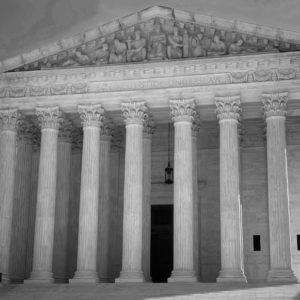
The courtroom mentioned that the flag show amounted to a public forum, and because many other teams had been allowed to lift their flags in celebration of the Boston group, town couldn't discriminate on the premise of the non secular group's viewpoint without violating the Structure.
"We conclude that, on stability, Boston didn't make the elevating and flying of private groups' flags a type of authorities speech," Justice Stephen Breyer wrote.
The case was filed in 2018 after a Boston official denied the application by the group Camp Constitution to boost a flag -- described as "Christian" within the utility -- on one of the three flagpoles outdoors Boston's city hall. The group is an all-volunteer association that seeks to "enhance understanding of the nation's Judeo-Christian ethical heritage."
Central to the case was whether the flagpole is perceived for example of government speech. In that case, the town has a right to limit shows without violating free speech rules. The Free Speech Clause of the Structure restricts authorities regulation of personal speech, it does not regulate government speech. But when, on the other hand, the display quantities to personal speech, in a government-created discussion board where others are invited to precise their views, the federal government can not discriminate based mostly on the perspective of one of many speakers.
Breyer concluded that the flag-raising program "does not specific authorities speech."
All of the justices agreed on the end result of the case, but three conservative justices said that they had different causes for ruling in opposition to Boston.
Justice Samuel Alito, writing for Justices Neil Gorsuch and Clarence Thomas, stated that although the courtroom relied upon "historical past, the general public's perception of who is talking, and the extent to which the government has exercised control over speech" to determine that the flag-raising program didn't quantity to authorities speech, he would have analyzed the case based on a extra exacting definition of what constitutes authorities speech.
Under a more slender definition of presidency speech, Alito wrote that it occurs "if -- however provided that" a authorities "purposefully expresses a message of its personal via individuals authorized to talk on its behalf."
He mentioned the flag program in Boston "can't possibly represent authorities speech" because town by no means deputized non-public speakers and that the various flags flown underneath this system "reflected a dizzying and contradictory array of perspectives that cannot be understood to express the message of a single speaker."
Boston often permits personal groups to fly flags, which are sometimes flags from completely different international locations, on one of the flag poles as a part of a program to celebrate varied Boston communities. The flag-raising occasions are in reference to ethnic and other cultural celebrations or the arrival of dignitaries from different international locations or to commemorate historic events.
In line with Camp Constitution, Boston in the 12 years prior had accepted 284 different flags that private organizations had sought to raise as part of the program and no other earlier purposes had been rejected.
In a case of surprising bedfellows, the conservative Christian group searching for to fly its flag gained the assist of each the Biden administration and the American Civil Liberties Union.
'A purely religious message'
Boston resident Hal Shurtleff, the founder of Camp Constitution, emailed the town's senior special occasions officials in 2017 in search of permission to boost the Christian flag and feature a presentation with local clergy specializing in Boston's history. At the time, there was no written policy to handle the functions, and the city had by no means denied a flag-raising application.
Town determined that it had no previous apply of flying a religious flag and the request was denied out of issues the town would appear to be endorsing a particular religion contrary to the Institution Clause of the Structure. After the controversy the city created its first written Flag Elevating policy.
Shurtleff sued town, arguing that its denial of the flag violated his free speech rights below the First Modification.
A district court dominated in favor of the town, holding that the city was justified in denying the Camp Constitution flag because the show amounted to government speech. A federal appeals courtroom affirmed the district court, holding that the raising of the Christian flag "would threaten to speak and endorse a purely religious message on behalf of town."
Shurtleff appealed the choice to the Supreme Court docket, arguing that Boston had violated the First Amendment because the flagpole displays amounted to a public discussion board and his group was denied due to its non secular viewpoint.
"The City's exclusion of Camp Structure's flag from the City Corridor Flag Poles discussion board solely because the flag was referred to as 'Christian' is unconstitutional viewpoint discrimination," his lawyer argued.
Mathew Staver, a lawyer for Shurtleff, informed the justices that town exercised no management over the messages expressed throughout a brief flag-raising event that was open to other groups.
Staver praised the court docket's action Monday.
"This 9-0 determination from the Supreme Court strikes a victory for private speech in a public forum," Staver stated in a statement, adding that the case was "much more significant than a flag. "
"Boston overtly discriminated in opposition to viewpoints it disfavored when it opened the flagpoles to all candidates after which excluded Christian viewpoints," he mentioned. "Government cannot censor religious viewpoints below the guise of government speech."
In supporting Shurtleff, David Cole, the nationwide legal director of the ACLU, argued in The Washington Post that "no cheap observer would perceive flying Camp Constitution's flag -- for only one hour on a single day -- to be the federal government's speech."
He stated that like the opposite flags flown earlier than, the flag would be seen because the group's flag "and as such, the town can't flip it down as a result of the flag is religious."
Solicitor General Elizabeth Prelogar also told the justices that the flag-raising program did not amount to authorities speech in part because town usually exercised no control over the choice of flags.
The town responded in court docket papers that the flagpole display was not a public discussion board open to all.
Douglas Hallward-Driemeier, an attorney representing Boston, advised the justices that the flagpole "that stands prominently on the City's seat of presidency is a means by which the City communicates its own message and has not merely been turned over to non-public events as a forum to pronounce their very own messages, including those antithetical to the Metropolis's."
He said that the flag-raising program's objectives had been to commemorate flags from many nations and communities to create an setting in the metropolis where "everybody feels included and is handled with respect."
"In a democratic system like ours, it's critically essential that governments retain the suitable and talent to talk on behalf of their constituents and take positions and privilege sure viewpoints when doing so," Hallward-Driemeier stated. He also stated the city has halted its flag-raising program whereas the appeals process performs out "to ensure it cannot be compelled to make use of its City flagpole to publicize messages antithetical to its personal."
This story has been up to date with extra particulars Monday.