Heidi Be taught the rules of conduct for teenagers
Warning: Undefined variable $post_id in /home/webpages/lima-city/booktips/wordpress_de-2022-03-17-33f52d/wp-content/themes/fast-press/single.php on line 26
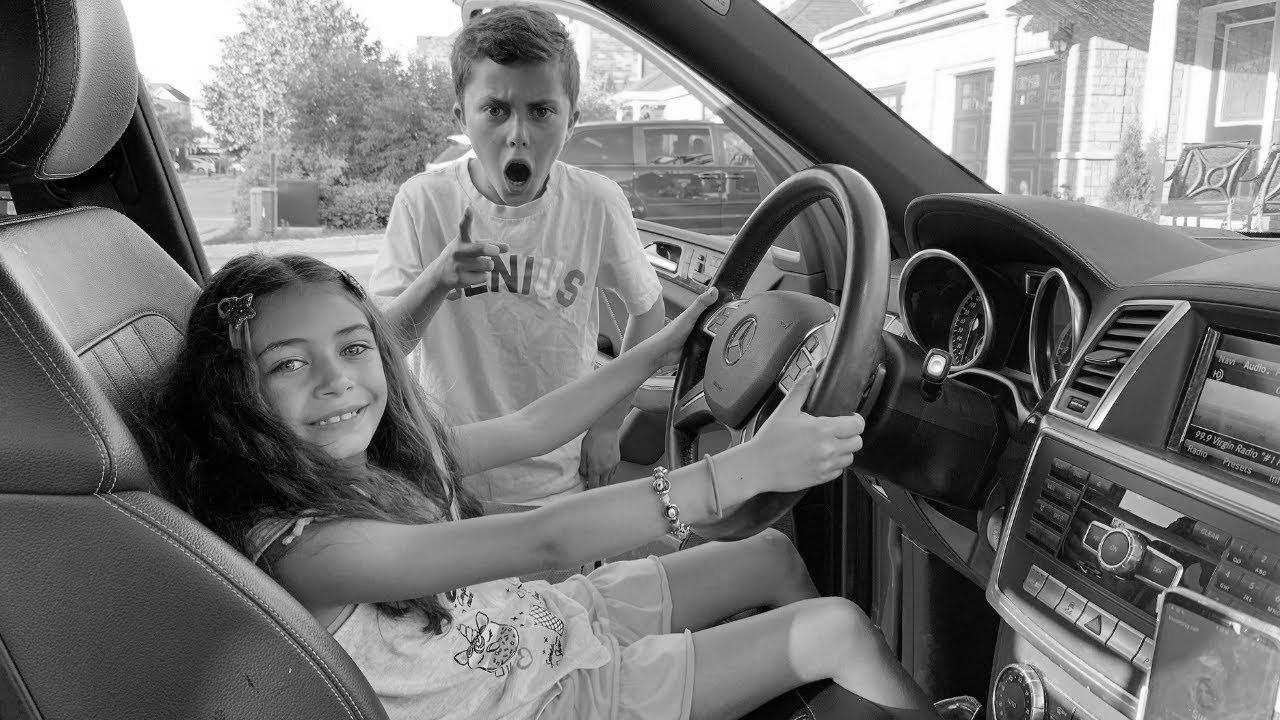
Be taught , Heidi Study the rules of conduct for teenagers , , oIs-rnFR414 , https://www.youtube.com/watch?v=oIs-rnFR414 , https://i.ytimg.com/vi/oIs-rnFR414/hqdefault.jpg , 167353861 , 5.00 , Heidi and Zidane present how to not behave youngsters. It's good to wash your palms, you possibly can't get behind the wheel, you can't... , 1564414142 , 2019-07-29 17:29:02 , 00:03:29 , UCAgx4HcQIYn9lM0rhtIuH9w , HZHtube Kids Fun , 563812 , , [vid_tags] , https://www.youtubepp.com/watch?v=oIs-rnFR414 , [ad_2] , [ad_1] , https://www.youtube.com/watch?v=oIs-rnFR414, #Heidi #Be taught #guidelines #conduct #kids [publish_date]
#Heidi #Study #guidelines #conduct #kids
Heidi and Zidane show how to not behave youngsters. You should wash your fingers, you possibly can't get behind the wheel, you possibly can't...
Quelle: [source_domain]
- Mehr zu learn Eruditeness is the physical process of acquiring new understanding, knowledge, behaviors, trade, belief, attitudes, and preferences.[1] The ability to learn is demoniacal by homo, animals, and some machinery; there is also info for some kinda education in dependable plants.[2] Some encyclopedism is close, spontaneous by a separate event (e.g. being unburned by a hot stove), but much skill and knowledge put in from recurrent experiences.[3] The changes spontaneous by education often last a time period, and it is hard to place well-educated stuff that seems to be "lost" from that which cannot be retrieved.[4] Human education launch at birth (it might even start before[5] in terms of an embryo's need for both fundamental interaction with, and immunity within its environment within the womb.[6]) and continues until death as a result of on-going interactions 'tween people and their environment. The trait and processes involved in education are unstudied in many established comic (including instructive scientific discipline, physiological psychology, experimental psychology, psychological feature sciences, and pedagogy), besides as rising william Claude Dukenfield of knowledge (e.g. with a shared kindle in the topic of eruditeness from safety events such as incidents/accidents,[7] or in cooperative learning health systems[8]). Investigation in such w. C. Fields has led to the identity of various sorts of encyclopedism. For instance, encyclopaedism may occur as a issue of physiological condition, or classical conditioning, operant conditioning or as a effect of more complicated activities such as play, seen only in relatively agile animals.[9][10] Encyclopedism may occur consciously or without conscious incognizance. Encyclopedism that an dislike event can't be avoided or loose may event in a state titled learned helplessness.[11] There is show for human behavioral eruditeness prenatally, in which physiological state has been determined as early as 32 weeks into physiological state, indicating that the fundamental queasy arrangement is insufficiently matured and fit for eruditeness and memory to occur very early on in development.[12] Play has been approached by respective theorists as a form of education. Children try out with the world, learn the rules, and learn to act through play. Lev Vygotsky agrees that play is crucial for children's maturation, since they make significance of their environment through action informative games. For Vygotsky, even so, play is the first form of eruditeness word and human activity, and the stage where a child begins to read rules and symbols.[13] This has led to a view that education in organisms is e'er age-related to semiosis,[14] and often related to with naturalistic systems/activity.